Introduction
If your sofa, dining chairs or curtains are becoming your cat’s favourite scratching surfaces, you are probably wondering how to stop cats from scratching furniture without making your pet stressed or unhappy. The good news is that you do not need to stop scratching altogether. Scratching is a normal feline behaviour that helps cats condition their claws, stretch their muscles and leave scent and visual marks in their environment.
The most effective approach is to make an appropriate scratching post more attractive than the furniture. That means choosing the right size and texture, placing it where your cat already wants to scratch, rewarding desirable behaviour and temporarily protecting the furniture.
With the right scratching post setup, patience and consistency, many cats can learn to redirect their scratching habits without punishment or stressful training methods.
Why Do Cats Scratch Furniture?
Before learning how to stop cats from scratching furniture, it helps to understand why they do it in the first place.
Scratching serves several purposes. It helps remove the worn outer layers of the claws, provides a satisfying full-body stretch and allows cats to leave visual and scent signals through glands in their paws.
Furniture can be especially attractive because it often has exactly what cats want: a stable surface, an interesting texture and a prominent location in the home.

A sofa corner, for example, may allow a cat to stand upright, stretch fully and pull its claws through fabric. From your cat’s perspective, it can be a much better scratching surface than a small post hidden in a corner.
This is why simply buying a scratching post does not always solve the problem. The post needs to match your cat’s preferences.
How to Stop Cats from Scratching Furniture With the Right Post
The scratching post is the centrepiece of a successful furniture-scratching solution. However, choosing the first post you see at a pet shop can lead to disappointment.
Your cat may reject it because it is too short, unstable, poorly positioned or covered in a material they dislike.
Choose a Scratching Post Tall Enough for a Full Stretch
For cats that scratch vertically, height matters.
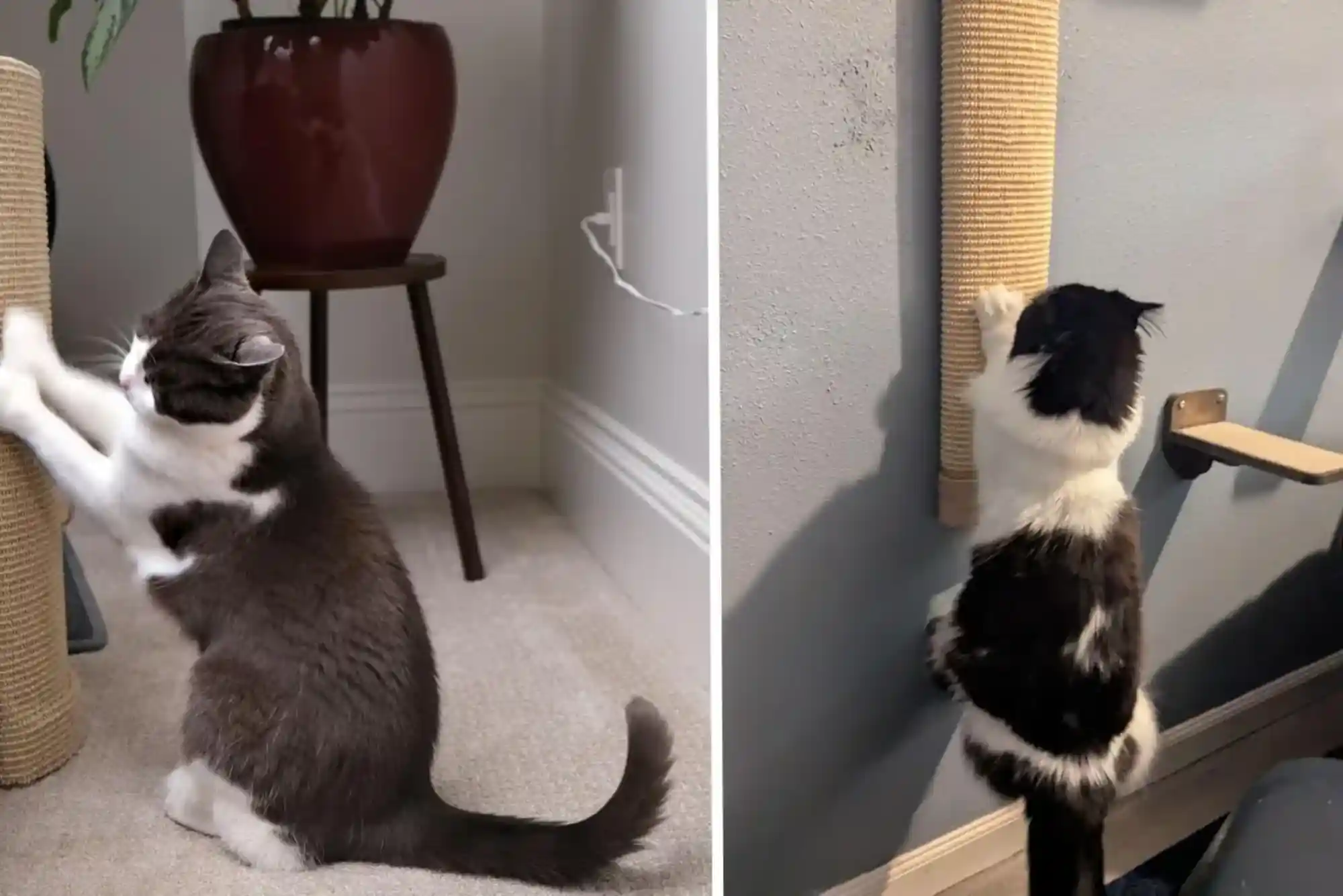
Your cat should be able to stand on its hind legs and stretch its body while scratching. A post that is too short may not provide the satisfying stretch your cat gets from a sofa or doorframe.
Veterinary and animal-behaviour guidance commonly recommends a tall, sturdy scratching surface that allows the cat to extend its body fully.
A taller post is particularly important for larger breeds and adult cats. If your cat reaches beyond the top of the post while stretching, consider upgrading to a taller model.
Make Stability a Priority
A scratching post should not wobble, slide or tip over when your cat puts its full weight against it.
Cats can quickly lose interest in a post that moves unexpectedly. Worse, they may decide that the sofa is safer and more reliable.
Choose a heavy base or securely anchored scratching structure. If necessary, position the post against a wall or another stable surface while your cat gets used to it.
A sturdy post is not simply a matter of convenience. Stability makes the scratching experience more predictable and satisfying.
Match the Scratching Material to Your Cat
Cats have individual preferences when it comes to scratching textures.
Some prefer sisal, while others favour corrugated cardboard, wood, carpet or upholstery-like materials. If your cat repeatedly scratches a particular type of furniture, use that behaviour as a clue.
For example, a cat that loves scratching a fabric sofa may not immediately appreciate a rough sisal post. A horizontal cardboard scratcher or a fabric-covered vertical surface could be a better starting point.
The key is to reproduce the physical sensation your cat already enjoys rather than expecting them to automatically accept a completely different surface.
Where Should You Put a Scratching Post?
Placement is one of the biggest factors in determining whether your cat actually uses the post.
A common mistake is putting the scratching post somewhere hidden because the owner wants to keep it out of sight. Unfortunately, cats often prefer scratching surfaces in prominent, frequently used areas.
Humane Society guidance recommends positioning a scratching post near the furniture or area the cat is already trying to scratch.
Place the Post Beside the Problem Area
If your cat scratches the right-hand corner of the sofa, place the scratching post directly beside that corner.
Do not initially put it several metres away and expect your cat to make the connection.
Once your cat regularly uses the post, you can gradually move it to a more convenient location if necessary.
This simple placement change can make a surprisingly large difference because you are working with your cat’s existing behaviour rather than fighting it.
Put Scratchers Near Sleeping Areas
Many cats like to stretch and scratch after waking up.
For this reason, placing a scratching post near a favourite sleeping area can encourage regular use. Feliway also recommends positioning scratching posts near sleeping areas or locations where unwanted scratching already occurs.
If your cat sleeps beside the sofa and immediately scratches it after waking, putting a post nearby gives them a convenient alternative at exactly the right moment.
How to Encourage Your Cat to Use the Scratching Post
Even with an excellent post in the perfect location, some cats need encouragement.
The objective is to create a positive association with the new scratching surface.
You can place a favourite toy near the post, play with your cat around it or use catnip if your individual cat responds to it. Food rewards can also reinforce the behaviour when your cat chooses the post.
Most importantly, avoid forcing your cat’s paws onto the post. If the experience frightens or frustrates the cat, it can create a negative association with the scratching area.
Instead, allow your cat to investigate naturally.
When you see your cat scratching the post, calmly provide praise, attention or a small treat. Over time, your cat learns that using the post produces a positive outcome.
For additional Cat Scratching Fixes, you can also explore Cat Scratching Fixes for practical guidance on managing scratching behaviour.
How to Make Furniture Less Attractive
While your cat learns to use the scratching post, protect the furniture temporarily.
A removable furniture cover can change the texture and appearance of the scratching area. You can also rearrange the furniture or block access to a favourite scratching corner where practical.
The idea is not to frighten your cat. Instead, you are interrupting the established habit while making the alternative scratching surface easier to access.
It can also help to clean previously scratched areas appropriately because scratching leaves visual and scent marks that may encourage cats to return to the same location.
Think of furniture protection as a temporary training aid rather than the main solution.
The long-term goal is to make the scratching post the most convenient and rewarding option.
Should You Have More Than One Scratching Post?
For many households, one scratching post is not enough.
Cats may scratch in several rooms or have different preferences depending on the situation. A cat may prefer a tall vertical post beside the sofa but a horizontal cardboard scratcher near a sleeping area.
Having several appropriate scratching surfaces gives your cat choices.
Multi-cat households may particularly benefit from multiple scratching areas so individual cats do not have to compete for access. Feliway recommends at least one scratching post per cat.
You do not necessarily need identical posts. Offering different shapes and textures can help you discover what your cat prefers.
What Not to Do When Your Cat Scratches Furniture
Knowing how to stop cats from scratching furniture also means knowing which approaches to avoid.
Punishing your cat, shouting or physically frightening them can increase stress and does not teach them what you want them to scratch instead. Animal-behaviour guidance recommends redirecting scratching rather than trying to suppress the behaviour completely.
Declawing is also not an appropriate solution to furniture scratching. Scratching is a normal behaviour, and removing the claws does not address the environmental or behavioural need behind it.
Instead, focus on providing an appropriate outlet.
Your cat should be allowed to scratch. Your job is to make sure they have a suitable place to do it.
What About Pheromone Therapy for Cats?
Sometimes scratching is connected not only to claw maintenance but also to territorial marking or environmental stress.
If your cat has suddenly started scratching doors, windows or multiple areas of the home, consider whether something has changed. A new pet, moving house, new furniture, unfamiliar people or conflict between cats can affect feline behaviour.
Pheromone products may be considered as part of a broader behaviour-management strategy, particularly when stress appears to be contributing to unwanted scratching. However, they should not replace proper environmental enrichment and appropriate scratching surfaces.
For general information about feline behaviour and Pheromone Therapy for Cats, you can also consult resources from the ASPCA.
If scratching becomes excessive or is accompanied by other sudden behavioural changes, speak with a veterinarian. A professional can help determine whether anxiety, conflict or another issue may be contributing.
How Long Does It Take to Stop Furniture Scratching?
There is no universal timeline because cats have different personalities, preferences and previous habits.
Some cats begin using a new scratching post almost immediately. Others need several days or weeks of consistent redirection.
The most important thing is consistency.
Keep the scratching post accessible, maintain its stability and reward your cat when they use it. If the cat repeatedly returns to the sofa, reconsider the post’s location, height, orientation and texture.
A failed scratching post does not necessarily mean your cat cannot be trained. It may simply mean you have not found the right combination yet.
A Practical Scratching Post Setup for Your Home
A successful setup should make the correct behaviour easy.
Start by identifying the furniture your cat scratches most often. Place a sturdy scratching post directly beside that area. Choose a height that allows a full stretch and select a texture similar to the surface your cat already enjoys.
Add another scratching surface near your cat’s favourite sleeping area. If the first post is ignored, experiment with a horizontal scratcher, different material or another design.
Reward use consistently, protect the furniture temporarily and avoid punishment.
This approach works because it respects the cat’s natural behaviour while changing where that behaviour happens.
If you are looking for professional pet-care information and services, Redrose can also be a useful starting point for exploring cat-care resources.
When Should You Speak to a Veterinarian?
Furniture scratching by itself is usually normal. However, a sudden or dramatic change in scratching behaviour deserves attention.
Contact your veterinarian if scratching appears alongside signs of anxiety, aggression, changes in eating or sleeping habits, excessive vocalisation, over-grooming or other unusual behaviours.
A veterinary professional can help distinguish normal scratching from behaviour potentially associated with stress or an underlying problem.
Remember that scratching is not your cat being naughty. It is a normal part of feline life. The solution is to provide a better outlet.
Give Your Cat a Better Place to Scratch
Learning how to stop cats from scratching furniture is really about redirecting a natural behaviour rather than eliminating it.
The most effective scratching post setup combines the right height, strong stability, an appealing texture and strategic placement. Put the post close to the furniture your cat already scratches, offer alternatives in important areas of the home and reward your cat for choosing them.
Avoid punishment and do not expect a single inexpensive post hidden in a corner to solve every scratching problem.
Observe what your cat likes, make the appropriate scratching surface more convenient and give the new habit time to develop.
FAQs
How do I stop my cat from scratching the furniture?
You cannot realistically stop a cat from scratching completely because scratching is a normal feline behaviour. Instead, redirect it to an appropriate scratching post. Place the post directly beside the furniture your cat currently scratches, make sure it is stable and reward your cat for using it.
How do I get my cat to use a scratching post?
Place the scratching post near your cat’s preferred scratching location or sleeping area. Experiment with vertical and horizontal designs and different materials. Toys, catnip or food rewards may encourage some cats to investigate the post.
Why does my cat scratch the furniture but not the scratching post?
The post may not match your cat’s preferred height, texture, orientation or location. Try placing it beside the furniture being scratched and choose a surface that provides a similar sensation. A sturdy post that allows a full-body stretch is particularly important for vertical scratchers.
How tall should a cat scratching post be?
A vertical scratching post should be tall enough for your cat to stretch their body fully while scratching. Many recommendations suggest around 90 cm or more for a suitable vertical post, although larger cats may need something taller.
Should I punish my cat for scratching furniture?
No. Punishment can increase stress and does not teach the cat which surface they should use instead. Redirect the behaviour to an appropriate scratching surface and reward your cat when they use it.
How many scratching posts should a cat have?
There is no single number that works for every household, but multiple scratching surfaces can be helpful, particularly in larger homes or multi-cat households. Place them in locations where your cat naturally rests, travels or scratches. Feliway recommends at least one scratching post per cat.
Related Reading: How to Prevent and Treat Hairballs in Indoor Cats