Introduction
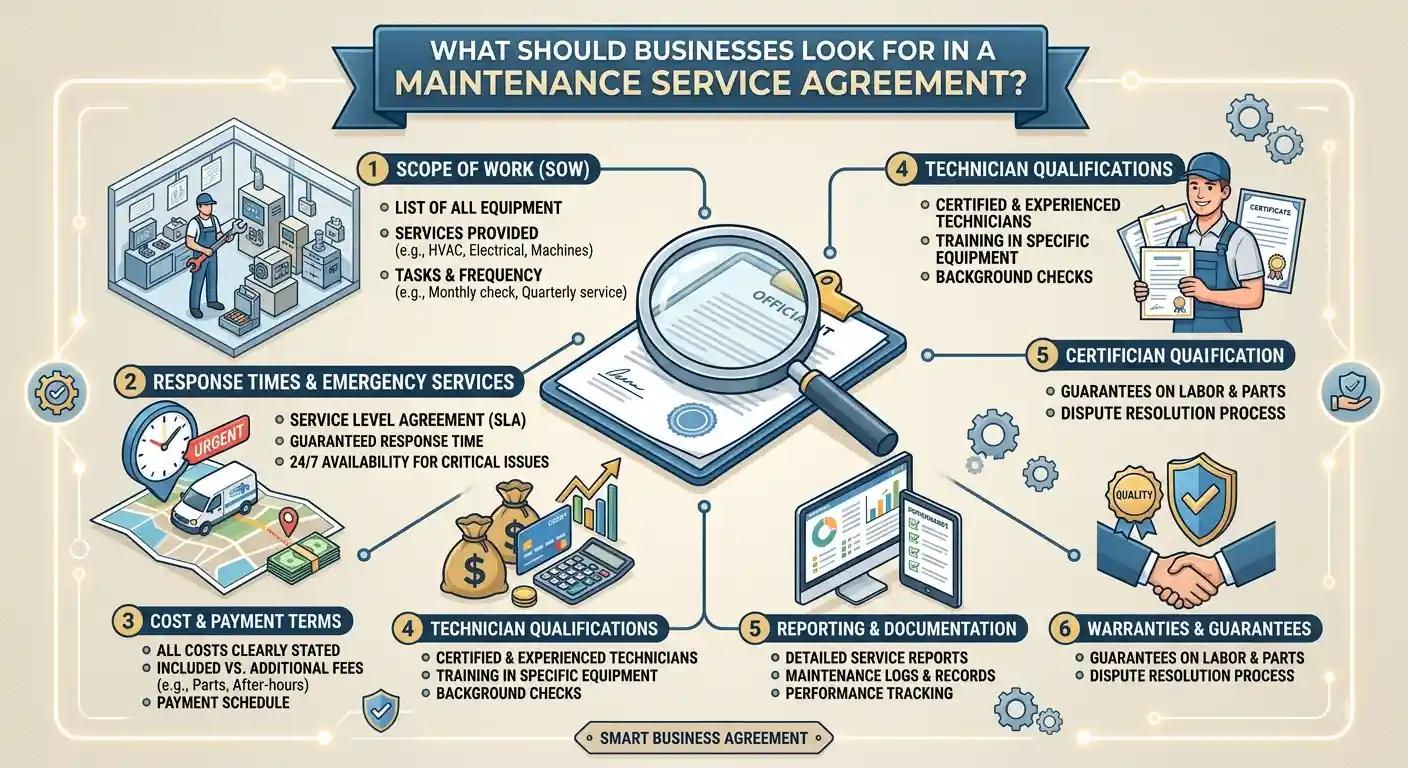
Choosing the right maintenance arrangement can have a direct impact on how reliably a business operates. Commercial properties often depend on HVAC systems, electrical installations, generators, pumps, plumbing equipment, machinery, and other essential assets.
An annual maintenance contract can provide a structured way to manage these systems through planned inspections and scheduled servicing. However, businesses should not choose a contract simply because it offers a low annual price.
The service scope, equipment coverage, response procedures, exclusions, and additional costs should all be reviewed before an agreement is signed.
Begin With the Equipment That Matters Most
The first step is to identify the assets that require professional attention.
A business should determine which systems are essential to its operations and which can tolerate occasional downtime. A manufacturing facility, for example, may prioritize production machinery, while an office may place greater importance on cooling, electrical, and backup power systems.
Once critical assets are identified, they can be specifically included in the maintenance schedule.

This makes the agreement more relevant and helps prevent important equipment from being overlooked.
Make Every Covered Asset Clear
The contract should provide a clear description of what is included.
Instead of using broad wording such as “all equipment,” the agreement should identify relevant systems and, where practical, individual units or equipment categories.
Clear asset identification can prevent disagreements later about whether a particular machine or installation falls within the provider’s responsibilities.
It also makes it easier for facility managers to compare the contracted scope with their own equipment records.
Check What Happens During a Routine Visit
Regular servicing should have a defined purpose.
Depending on the equipment, technicians may inspect components, clean parts, test performance, identify wear, check connections, lubricate moving components, or make appropriate adjustments.
Businesses should ask the provider to explain the tasks performed during scheduled visits.
A maintenance plan is more useful when routine inspections are based on the actual requirements of the equipment rather than simply following a generic checklist.
Match Service Frequency With Equipment Usage
Not every asset needs attention at the same interval.
Equipment operating for long hours or under demanding conditions may require more frequent inspections. Systems exposed to dust, heat, moisture, or heavy usage may also have different servicing requirements.
The agreement should therefore establish a practical schedule based on equipment condition and operating environment.
This helps businesses avoid both under-maintenance and unnecessary service visits.
Separate Routine Service From Breakdown Assistance
One of the most important contract details is the difference between planned servicing and corrective repairs.
Scheduled visits are intended to maintain equipment and identify potential problems. Breakdown assistance is required when something stops functioning properly.
An annual maintenance contract should clearly explain whether emergency callouts are included, offered at a discounted rate, or charged separately.
This distinction can help businesses understand their financial responsibility when an unexpected technical problem occurs.
Pay Attention to Response Commitments
When an important system fails, the availability of technical support can have a direct effect on downtime.
The agreement should explain how service requests are submitted and how quickly the provider aims to respond.
For critical facilities, businesses may require different response arrangements for urgent faults compared with routine requests.
Written response commitments are preferable to relying on informal assurances.
Find Out How Replacement Parts Are Handled
Labor and spare parts are often treated differently in maintenance agreements.
A provider may include technician labor while charging separately for replacement components. Another contract may include certain consumables or minor parts within the annual fee.
Businesses should ask for a clear explanation of the parts policy.
If approval is required before purchasing components, the contract should also explain how quotations and authorization will be handled.
Understand Major Repair Procedures
A routine maintenance agreement does not necessarily mean that every repair is included.
Major failures may require expensive components, specialist labor, or extensive corrective work.
An annual maintenance contract should explain what happens when a significant repair is discovered. Ideally, the customer should know whether the provider must submit a quotation before undertaking work outside the agreed scope.
This can give businesses greater control over unexpected expenditure.
Ask for an Initial Equipment Assessment
The condition of equipment at the beginning of the service period can affect the maintenance relationship.
If an asset already has serious faults, a provider may recommend corrective work before accepting it into a regular servicing program.
An initial assessment can document existing problems and establish a baseline for future inspections.
This is particularly useful for older equipment or systems with an unclear maintenance history.
Review the Exclusions in Detail
The exclusions section deserves as much attention as the list of included services.
A contract may exclude damage resulting from misuse, unauthorized modifications, external events, accidents, or normal replacement requirements.
Some providers may also exclude major components or specialist work.
Understanding these limitations before signing can prevent unpleasant surprises when a repair is required.
Maintenance Reports Should Be Useful
A service report should provide more than confirmation that a technician visited the property.
Useful documentation can record the equipment inspected, condition observed, faults identified, corrective work performed, and recommendations for future action.
Over time, these reports create a maintenance history that can help managers identify recurring problems and monitor asset condition.
They can also support decisions about repair, replacement, or future budgeting.
Consider Access and Scheduling Requirements
Maintenance technicians need appropriate access to equipment.
Commercial properties may have security controls, restricted areas, tenant requirements, or operating schedules that affect when technicians can work.
The agreement should explain how service appointments are arranged and who is responsible for providing access.
Businesses operating outside standard hours should also determine whether evening, weekend, or holiday visits are available.
Review Emergency Availability
Some businesses can tolerate a short delay when equipment fails. Others cannot.
Hotels, factories, warehouses, commercial facilities, and other operationally sensitive businesses may require rapid assistance.
Before signing an annual maintenance contract, businesses should confirm whether emergency support is available and under what conditions.
They should also verify whether after-hours assistance carries additional charges.
Check the Provider’s Technical Capability
The quality of a maintenance agreement ultimately depends on the company delivering the service.
A provider should have suitable experience with the equipment included in the contract.
Businesses should consider technician qualifications, practical experience, staffing levels, availability, and familiarity with similar commercial environments.
For specialized equipment, general maintenance experience may not be enough.
Look at Communication Procedures
Technical problems can become more difficult to manage when communication is unclear.
The business should know who to contact, how service requests are submitted, how emergencies are escalated, and how updates are provided.
For larger organizations, assigning a dedicated account contact can make communication more efficient.
A clear process can also help managers track unresolved maintenance issues.
Consider Reporting and Performance Reviews
A longer service relationship should be evaluated periodically.
Businesses can review maintenance reports to determine whether scheduled visits are taking place, recurring faults are being addressed, and recommendations are being followed.
This creates an opportunity to discuss service quality with the provider before small issues become larger concerns.
Regular performance reviews can also help determine whether the existing service scope still matches the company’s requirements.
Read the Financial Terms Carefully
The annual price is only one part of the financial picture.
Businesses should understand payment schedules, taxes where applicable, emergency charges, spare parts, major repairs, additional visits, and services outside the agreed scope.
A lower quotation may become more expensive if many important services are billed separately.
Comparing the complete cost structure provides a more realistic picture of the agreement’s value.
Check Renewal and Cancellation Conditions
The contract should explain what happens when the service period ends.
Businesses should review renewal dates, notice periods, pricing changes, and cancellation conditions.
These details matter because operational requirements can change during the year.
A company may expand its premises, replace equipment, or decide that a different service arrangement is more suitable.
Build the Agreement Around Business Needs
The most effective maintenance arrangement is one that reflects the actual environment in which the equipment operates.
A small office does not necessarily require the same coverage as a manufacturing plant or large commercial facility.
Businesses should therefore avoid paying for unnecessary services while making sure critical assets are properly covered.
A customized scope can provide better value than a generic package.
Final Thoughts
A well-defined maintenance agreement should remove uncertainty rather than create it. Businesses should know which assets are covered, what technicians will do during scheduled visits, how breakdowns are handled, and which costs fall outside the agreed service.
Before choosing a provider, it is worth reviewing equipment coverage, service frequency, response commitments, spare parts, exclusions, documentation, technical expertise, and financial terms.
When these details are clearly documented, an annual maintenance contract can become a practical tool for managing equipment care and facility upkeep. A well-structured agreement can help businesses create a more predictable maintenance process while supporting reliable day-to-day operations.
Related Reading: Manicure Pedicure: Complete Nail Care for a Clean and Polished Look
Related Reading: Crypto Casinos in Canada (2026): What Players Should Look For
Related Reading: What Does a Full Car Service Include and why it Matters
Related Reading: تأثير وين المرجان: هل سيجذب أول منتجع كازينو أونلاين في الإمارات المزيد من اللاعبين؟
Related Reading: Uwell Caliburn AK3 Review: Compact and Reliable
Related Reading: Fast, Genuine Nicotine Delivery Across the UAE in 2026
Related Reading: TEREA Switzerland and Japan Menthol: UAE Authenticity Guide — full guide
Related Reading: Second Hand Car Warranty: 7 Questions to Ask Before Signing