Ecommerce competition continues to intensify in 2026, and visibility on search engines has become a decisive factor for online success. Many online stores struggle with hidden technical issues that silently block traffic growth, reduce indexing efficiency, and weaken overall performance in search results. SEO audit tools for ecommerce stores play a crucial role in identifying these barriers and providing actionable insights to fix them.
From broken product pages to slow-loading category structures and duplicate content issues, ecommerce websites often accumulate SEO problems over time. Without regular audits, these issues can significantly impact rankings and revenue potential. This is where advanced SEO audit tools become essential for digital growth strategies.
Why SEO Audits Matter for Ecommerce Websites
Ecommerce websites are usually large, dynamic, and constantly updated with new products, categories, and filters. This complexity increases the risk of technical SEO issues. Search engines depend on clean architecture, fast loading speed, and proper indexing signals to rank pages effectively.
An SEO audit helps uncover critical problems such as crawl errors, missing meta tags, duplicate content, and broken internal links. These issues may seem small individually but collectively they can block significant traffic growth. Regular audits ensure that search engines can efficiently access and understand your website structure.
Key Features to Look for in SEO Audit Tools
Not all tools offer the same level of insight. Ecommerce businesses need audit tools that go beyond basic checks and provide deep technical analysis.
Important features include website crawling capability, JavaScript rendering support, page speed analysis, structured data validation, and log file analysis. Tools that integrate with analytics platforms also provide better visibility into user behavior and performance gaps.

Additionally, ecommerce-focused tools should handle large-scale product pages without slowing down and should detect issues like faceted navigation problems and index bloat.
Best SEO Audit Tools for Ecommerce Stores in 2026
Below are some of the most reliable SEO audit tools used by professionals to optimize ecommerce websites and improve organic visibility.
1. Screaming Frog SEO Spider
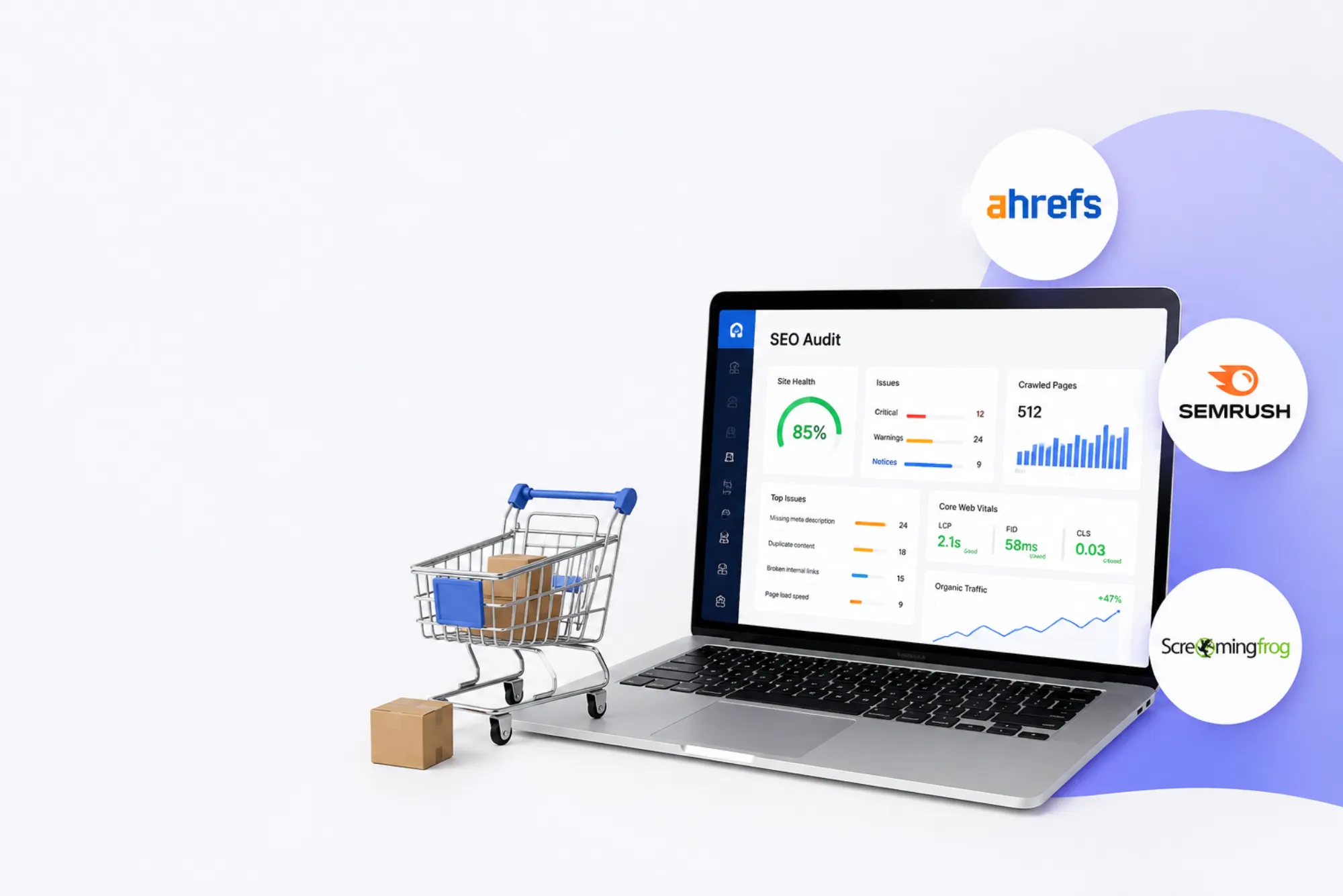
Screaming Frog remains one of the most powerful desktop-based website crawlers. It is widely used for identifying broken links, duplicate content, missing tags, and redirect chains. For ecommerce stores with large inventories, it provides deep technical insights that are essential for cleanup and optimization.
2. Ahrefs Site Audit
Ahrefs offers a cloud-based audit tool that continuously monitors website health. It provides detailed reports on SEO issues, performance metrics, and backlink-related insights. Ecommerce marketers use it to track technical improvements and competitor performance simultaneously.
3. SEMrush Site Audit
SEMrush provides a comprehensive SEO auditing system that highlights over 130 technical issues. It categorizes problems into errors, warnings, and notices, making it easier for teams to prioritize fixes. It also integrates well with keyword tracking and content optimization tools.
4. Google Search Console
Google Search Console is a free but essential tool for every ecommerce website. It helps monitor indexing status, search performance, and mobile usability issues. While not as advanced as paid tools, it provides direct data from Google itself.
5. Sitebulb
Sitebulb is known for its visual reporting system, which makes technical SEO easier to understand. It provides clear recommendations and prioritization scores, making it ideal for teams working on large ecommerce platforms.
SEO Audit Tools Comparison Table
| Tool | Best For | Key Strength | Pricing Type |
|---|---|---|---|
| Screaming Frog | Technical crawling | Deep site-level analysis | Paid (desktop) |
| Ahrefs | All-in-one SEO monitoring | Backlink + audit integration | Subscription |
| SEMrush | Enterprise SEO teams | Extensive issue detection | Subscription |
| Google Search Console | Indexing insights | Direct Google data | Free |
| Sitebulb | Visual SEO reporting | Easy-to-understand insights | Paid |
How to Run an Effective Ecommerce SEO Audit
A structured approach is essential when using SEO audit tools for ecommerce stores. Start by crawling the entire website to identify broken pages, duplicate content, and missing metadata. Next, analyze page speed and mobile usability to ensure smooth user experience across devices.
After technical checks, focus on indexation. Ensure that important product and category pages are properly indexed while low-value pages are excluded. Finally, review internal linking structure to improve crawl flow and distribute authority across key pages.
Businesses listed on platforms like Dubai business directory often benefit from strong SEO structures that improve visibility across competitive markets.
Common SEO Issues Found in Ecommerce Websites
SEO audit tools frequently uncover issues that directly affect traffic performance. These include duplicate product descriptions, slow-loading images, incorrect canonical tags, and broken internal links. Many ecommerce platforms also suffer from faceted navigation problems that create unnecessary URL variations.
Another common issue is thin content on category pages, which reduces relevance in search rankings. Addressing these problems can significantly improve organic visibility and conversion rates.
Service-based industries such as technical services companies and engineering consultants in UAE also rely on similar SEO auditing principles to maintain strong digital presence.
Conclusion
SEO audit tools for ecommerce stores have become essential for maintaining strong search visibility in a highly competitive digital landscape. As online stores grow, technical issues naturally increase, making regular audits a necessity rather than an option.
By using tools like Screaming Frog, Ahrefs, SEMrush, Google Search Console, and Sitebulb, businesses can identify hidden problems, improve site health, and unlock new opportunities for organic traffic growth. A consistent auditing strategy ensures long-term performance and stronger search engine rankings in 2026 and beyond.
FAQs
1. What is the best SEO audit tool for ecommerce websites?
SEMrush and Screaming Frog are widely considered the most effective tools for deep ecommerce SEO audits.
2. How often should ecommerce stores run SEO audits?
Most ecommerce websites should run a full SEO audit at least once every quarter.
3. Are free SEO audit tools enough for ecommerce?
Free tools like Google Search Console are useful, but paid tools provide deeper insights required for large ecommerce sites.
4. What is the biggest SEO issue in ecommerce websites?
Duplicate content and crawl inefficiencies are among the most common and impactful issues.
Related Reading: Market Research Services in the UAE: Unlocking Business Growth