Temperature-controlled storage is an important consideration when managing laboratory research materials that have specific environmental requirements. Appropriate storage arrangements, clear product documentation, and reliable monitoring records help laboratories understand how materials are maintained between receipt and their intended research use.
For laboratories sourcing materials through Remy Research, reviewing the available product information and storage documentation can help establish the requirements that should be considered during laboratory receiving and inventory management.
1. What Is Temperature-Controlled Storage?
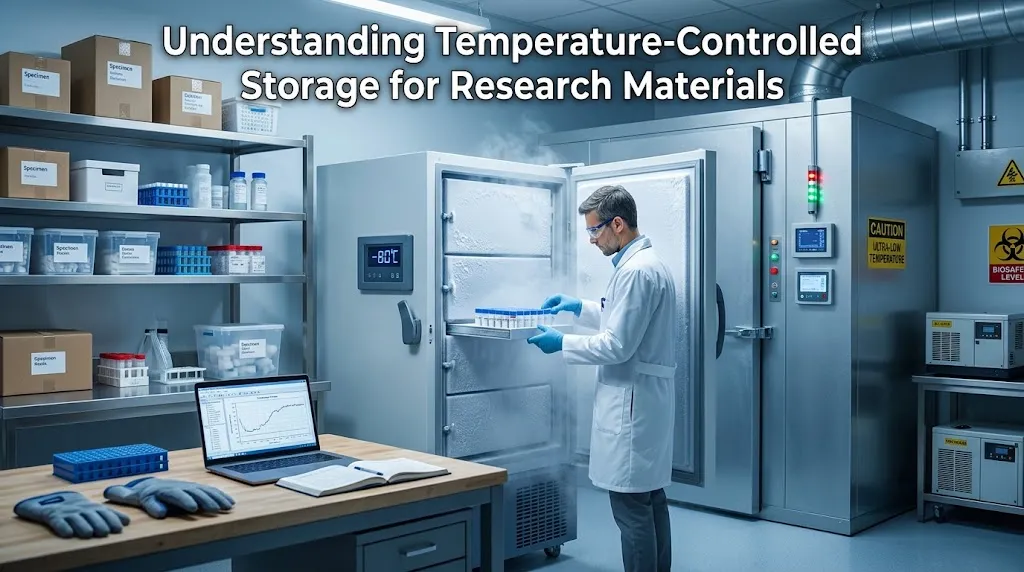
Temperature-controlled storage refers to maintaining materials within specified environmental conditions using suitable storage equipment and documented procedures.
Depending on the material, these arrangements may involve:
- Temperature-controlled refrigerators.
- Laboratory freezers.
- Monitored storage cabinets.
- Dedicated storage areas.
- Temperature-monitoring devices.
- Documented inventory and access procedures.
The appropriate arrangement depends on the material’s stated requirements. Laboratories should not assume that all research materials require the same storage conditions.
2. Why Material-Specific Storage Requirements Matter
Different research materials may have different storage requirements. These requirements can depend on their composition, formulation, packaging, and documented stability characteristics.

Using a general storage assumption for every material can create uncertainty.
Before assigning a storage location, laboratory personnel should review:
- Product documentation.
- Supplier-provided storage information.
- Relevant handling instructions.
- Any stated environmental limitations.
- Available technical documentation.
If the required conditions are unclear, the laboratory should request clarification from the supplier or another appropriate technical source.
3. Selecting Suitable Storage Equipment
Storage equipment should be selected according to the documented requirements of the materials being maintained.
Important considerations include:
Temperature range: The equipment should be suitable for the specified storage conditions.
Capacity: Available space should accommodate the laboratory’s inventory without creating unnecessary congestion.
Monitoring capability: The equipment should support appropriate temperature monitoring.
Security: Access should be managed according to laboratory procedures.
Maintenance: Equipment maintenance and relevant inspections should be documented.
A suitable storage unit is only one part of the process. Consistent monitoring and reliable records are also necessary.
4. Understanding Temperature Monitoring
Temperature monitoring provides information about the environmental conditions inside a storage unit.
Depending on laboratory requirements, monitoring may involve digital temperature displays, independent monitoring devices, or automated data loggers.
A monitoring record may include:
- Storage equipment identification.
- Date and time of measurement.
- Recorded temperature.
- Monitoring device reference.
- Person responsible for the review.
- Any identified deviations.
The frequency and method of monitoring should follow the laboratory’s approved procedures.
A displayed temperature at one particular moment does not necessarily demonstrate that the storage unit maintained the required conditions continuously.
5. Maintaining Storage Location Records
Every stored material should have a documented location within the laboratory’s inventory system.
Location information may include:
- Building or laboratory identification.
- Storage room.
- Equipment reference.
- Shelf or compartment.
- Internal sample identifier.
- Date assigned to the location.
When a sample is moved, the record should be updated according to the laboratory’s procedures.
This helps staff identify the recorded location of a material without relying on informal communication or memory.
6. Managing Temperature Deviations
A temperature deviation occurs when a recorded storage condition falls outside the applicable documented requirements.
Possible causes may include:
- Equipment malfunction.
- Power interruptions.
- Door or seal problems.
- Monitoring device failure.
- Incorrect equipment settings.
- Environmental changes.
When a deviation is identified, laboratory personnel should preserve the relevant monitoring information and follow their established review procedures.
The review may include the recorded temperature, duration, affected storage unit, material documentation, and any relevant supplier guidance.
A temperature deviation should not automatically be interpreted as proof that a material has become unsuitable. Equally, the absence of visible changes should not be treated as proof that its documented requirements were maintained.
7. Understanding Storage Records for Research Peptides
Research peptide materials may be supplied in different product formats and packaging arrangements. Their storage requirements should therefore be reviewed individually rather than inferred from the general product category.
Researchers reviewing Research Peptides UAE should distinguish between product descriptions, supplier storage information, and independently documented storage observations.
A useful storage record should identify the specific material and reference the documentation used to establish its applicable conditions.
8. Packaging and Storage Identification
Packaging labels help laboratory personnel identify materials and connect physical containers with their corresponding records.
Relevant label information may include:
- Product or material name.
- Internal sample identifier.
- Supplier batch or lot reference, where available.
- Receipt date.
- Storage location reference.
- Relevant handling information.
Labels should remain readable and consistent with the laboratory’s recordkeeping system.
If a label becomes damaged or unclear, the discrepancy should be addressed through the laboratory’s approved identification procedure rather than by guessing the missing information.
9. Storage Inventory and Periodic Reviews
A storage inventory provides an overview of materials currently recorded within a laboratory’s storage system.
Periodic reviews may help identify:
- Materials with incomplete records.
- Missing or inconsistent identifiers.
- Unrecorded location changes.
- Outdated inventory entries.
- Missing supporting documentation.
- Materials approaching the end of their approved retention period.
The frequency of inventory reviews should be established by laboratory procedures and relevant requirements.
A well-maintained inventory should reflect the recorded status of materials rather than simply listing product names.
10. Equipment Maintenance and Monitoring Reliability
Storage equipment and monitoring devices should be maintained according to their applicable operating and maintenance requirements.
Relevant records may include:
- Equipment identification.
- Maintenance dates.
- Service history.
- Monitoring device information.
- Calibration or verification records, where applicable.
- Reported equipment issues.
- Corrective actions.
These records help laboratories understand whether their monitoring arrangements were maintained and whether any equipment-related concerns require further review.
Laboratories should avoid describing equipment as calibrated, validated, or certified unless supporting documentation is available.
11. Responsibilities of Laboratory Personnel
Clear responsibilities help ensure that storage activities are performed consistently.
Depending on the laboratory’s structure, responsibilities may include:
Receiving personnel: Record incoming materials and confirm the available storage information.
Laboratory staff: Follow approved handling and storage procedures.
Inventory personnel: Maintain accurate location and material records.
Technical supervisors: Review relevant storage requirements and investigate reported deviations.
Management: Ensure that appropriate procedures, equipment, and documentation systems are available.
The exact responsibilities should be defined within the laboratory’s internal quality and operational procedures.
12. Common Storage Documentation Mistakes
Some common issues can make temperature-controlled storage records unreliable:
- Applying identical storage conditions to different materials without checking documentation.
- Failing to record storage location changes.
- Relying only on a single temperature reading.
- Ignoring monitoring device problems.
- Failing to preserve records of temperature deviations.
- Using unclear or damaged labels.
- Recording unverified storage claims as confirmed facts.
Addressing these issues helps maintain a more accurate account of laboratory storage conditions.
13. Temperature-Controlled Storage Checklist
Laboratories can use the following checklist when reviewing their storage arrangements:
- Are material-specific storage requirements available?
- Is the assigned storage equipment suitable?
- Is the storage location documented?
- Are monitoring procedures established?
- Are temperature records retained?
- Are monitoring devices appropriately maintained?
- Are deviations recorded and reviewed?
- Are product and sample identifiers readable?
- Are location changes documented?
- Are inventory records periodically reviewed?
- Are relevant equipment maintenance records available?
This checklist should be adapted to the laboratory’s materials and internal procedures.
Conclusion
Temperature-controlled storage involves more than selecting a refrigerator or freezer. It requires material-specific information, appropriate equipment, reliable monitoring, clear identification, and consistent documentation.
By maintaining accurate storage and inventory records, laboratories can better understand the documented history of their research materials and identify issues that require review.
All materials discussed in this article are strictly for research-use-only and in-vitro laboratory research. They are not intended for human or veterinary use, diagnosis, treatment, or administration.