Introduction
Living with cat allergies does not always mean giving up on the idea of having a feline companion. While no cat is completely allergy-free, certain hypoallergenic cat breeds may cause fewer symptoms for some people. The important thing to understand is that cat allergies are not caused simply by fur. The primary allergen is a protein called Fel d 1, which is found mainly in cat saliva and skin secretions and becomes distributed through grooming, dander, and household surfaces.
Some hypoallergenic cat breeds may produce less of this allergen, while others shed less and therefore spread fewer allergen-containing particles around the home. However, reactions vary considerably between individual cats and individual people. A breed that works well for one allergy sufferer may still cause symptoms for another.
If you are considering adopting a cat, learning how different breeds behave, how much they shed, and how they may affect allergy exposure can help you make a more informed decision.
What Are Hypoallergenic Cat Breeds?
The term “hypoallergenic” can be misleading. It does not mean that a cat produces zero allergens. Instead, hypoallergenic cat breeds are generally described as breeds that may produce fewer allergens or spread fewer allergens than other cats.
Fel d 1 is particularly important because it is produced by cats regardless of whether they have long, short, curly, or almost no visible hair. When a cat grooms itself, saliva containing Fel d 1 is transferred to its coat. Once the saliva dries, allergen-containing particles can become part of household dust and airborne material.
This explains why a hairless cat is not automatically a completely hypoallergenic pet. The absence of fur does not eliminate the protein responsible for the allergic response.

For allergy sufferers, the practical goal is therefore not to find a completely allergen-free cat. Instead, it is to identify a cat that produces or distributes allergens at a level the individual can tolerate.
Why Do Some Cats Cause Fewer Allergy Symptoms?
There are several reasons why certain hypoallergenic cat breeds may be easier for allergy sufferers to live with. Some cats may naturally produce lower amounts of Fel d 1, while others have coat characteristics that result in less shedding.
The Siberian, for example, is frequently discussed because research and breed-specific observations have associated some Siberians with lower Fel d 1 levels. Their long coat can make them look like an unlikely choice for an allergy-sensitive household, but coat length alone does not determine allergen production.
Low-shedding breeds can also be useful because less loose hair may mean fewer allergen-containing particles being distributed around the home. However, low shedding should not be confused with low allergen production.
Most importantly, there can be significant variation between individual cats. This is why spending time with a specific cat before adoption is one of the most useful precautions an allergy sufferer can take.
Siberian
The Siberian is one of the most frequently recommended hypoallergenic cat breeds, despite having a thick, long coat. This may seem surprising, but the amount of fur a cat has is not the same thing as the amount of allergen it produces.
Siberians are affectionate, intelligent, and generally social cats. They can form strong relationships with their families and often enjoy interactive play. Their luxurious coat does require regular grooming, particularly during periods of heavier shedding.
For allergy sufferers interested in a Siberian, the best approach is to spend time around the actual cat rather than relying only on the breed label. Individual allergen production can vary, so personal tolerance matters.
Balinese
The Balinese is another popular choice among hypoallergenic cat breeds. Despite its long, elegant coat, the Balinese generally has a single-layer coat and tends to shed less than many other long-haired cats. Some sources also associate the breed with lower Fel d 1 production.
Balinese cats are closely related to Siamese cats and tend to be intelligent, energetic, vocal, and highly social. They usually enjoy interacting with their owners and may not be ideal for someone looking for an extremely independent pet.
Their coat still needs regular attention, but their combination of relatively low shedding and engaging personality makes them an interesting option for people researching hypoallergenic cat breeds.
Russian Blue
Russian Blues are often included among hypoallergenic cat breeds because they tend to shed relatively little and are commonly reported to produce lower amounts of allergens.
Their dense blue-gray coat gives them a distinctive appearance, while their personalities are often described as calm and affectionate. They can be somewhat reserved around unfamiliar people but may become very attached to their regular family.
Although Russian Blues are widely recommended for allergy-sensitive households, there is no guarantee that every individual will tolerate one. Allergy response should always be tested with the particular cat whenever possible.
Sphynx
The Sphynx is probably the breed most people think of when they hear “hypoallergenic cat.” Because Sphynx cats have little or no conventional fur, they do not shed in the same way as heavily coated breeds.
However, the Sphynx is not allergen-free. The cat still produces Fel d 1 through saliva and skin secretions. In fact, because there is little fur to absorb skin oils, Sphynx cats require regular bathing to keep their skin clean and healthy.
Sphynx cats are usually affectionate, playful, and strongly people-oriented. They also need protection from excessive sunlight and cold temperatures. Therefore, choosing a Sphynx should be based on its complete care requirements rather than allergies alone.
Devon Rex
The Devon Rex is another breed commonly considered among the more allergy-friendly cats. Its short, curly coat sheds relatively little compared with many conventional cat coats.
Devon Rex cats are known for being active, curious, affectionate, and highly involved with their families. They often enjoy climbing, playing, and following people around the house.
Their low-shedding coat can reduce the amount of loose hair in the environment, but Devon Rex cats still produce allergens. For this reason, they should be considered one of the potentially suitable hypoallergenic cat breeds, rather than a guaranteed allergy-free option.
Cornish Rex
The Cornish Rex has an unusually fine, curly coat with very little conventional guard hair. This gives the breed a distinctive appearance and contributes to its reputation as a lower-shedding cat.
For some allergy sufferers, reduced shedding may make household allergen management easier. However, the Cornish Rex still produces the proteins responsible for cat allergies.
These cats are generally energetic and playful. They often need plenty of interaction and mental stimulation, so they can be a good match for people who want an active companion rather than a quiet lap cat.
Bengal
Bengals have a short, sleek coat that often feels more like a soft pelt than traditional cat fur. They are relatively low-shedding and usually require less coat maintenance than long-haired breeds.
This has led many people to include Bengals among hypoallergenic cat breeds. However, the reason is primarily their coat and shedding characteristics rather than strong evidence that Bengals produce unusually low levels of Fel d 1.
Bengals are extremely intelligent and energetic. They need play, climbing opportunities, and enrichment to stay physically and mentally satisfied. Someone choosing a Bengal should therefore consider lifestyle compatibility as carefully as allergy concerns.
Siamese
Siamese cats have a short, fine coat and are often included in discussions about hypoallergenic cat breeds because they generally do not shed as heavily as some long-haired cats.
Their biggest defining characteristic, however, may be their personality. Siamese cats are famously social and vocal. They often want considerable attention and may communicate frequently with their owners.
For someone who wants an interactive companion and can tolerate the individual cat, a Siamese may be worth considering. Spending time with the specific cat remains essential because coat type alone cannot predict an allergy response.
Javanese
Javanese cats have a relatively fine, single-layer coat and are commonly included in discussions of hypoallergenic cat breeds. Their coat tends to shed less than that of many cats with dense undercoats.
They are intelligent, playful, and people-oriented. Like other breeds related to the Siamese family, Javanese cats can be quite vocal and may seek regular interaction.
Their lower-shedding coat can be helpful for some households, but they still produce Fel d 1. Allergy sufferers should therefore approach the breed as a potentially lower-allergen option rather than an allergy-proof choice.
Burmese
Burmese cats have a short, close-lying coat that requires relatively little grooming. Their low-maintenance coat is one reason they frequently appear on lists of hypoallergenic cat breeds.
They are generally affectionate, energetic, and strongly attached to people. Regular play is important because they are active cats that can become bored without sufficient stimulation.
As with other breeds, the Burmese does not eliminate the underlying cause of cat allergies. Its shorter coat and lower shedding may simply make allergen management easier for some people.
How to Reduce Allergens at Home
Choosing one of the potentially suitable hypoallergenic cat breeds is only part of the solution. Your home environment can have a major effect on the amount of allergen you encounter.
Regular cleaning can help remove allergen-containing hair and dust from floors and furniture. A vacuum cleaner with effective filtration can be particularly useful, while washing bedding and washable fabrics regularly can reduce accumulated allergens.
Keeping the cat out of the bedroom may also reduce your exposure during the hours when you spend the longest period in one place. Washing your hands after handling the cat can further reduce the transfer of allergens to your face and other surfaces.
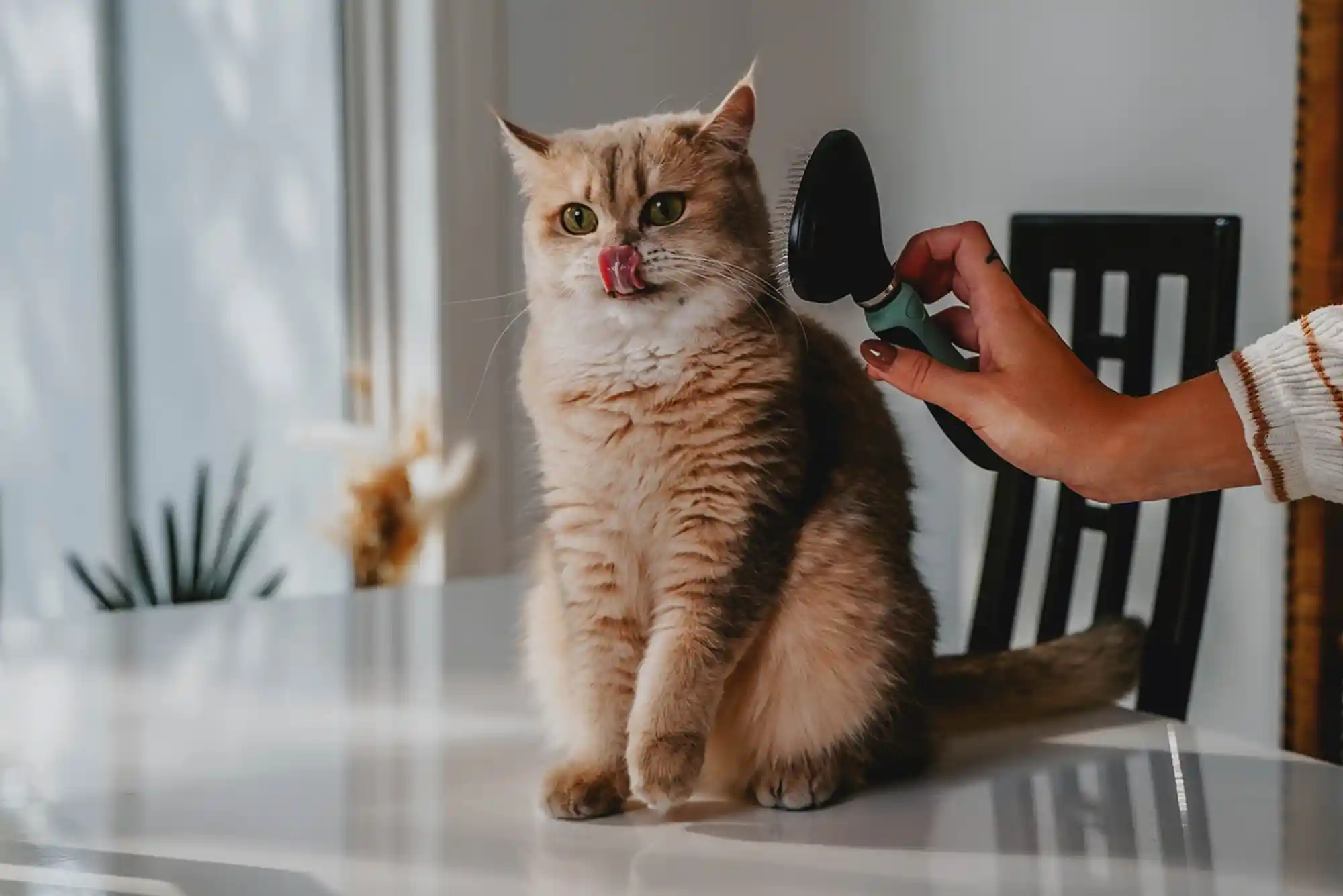
Grooming can also help control loose hair. If grooming triggers symptoms, it may be better for another household member to handle brushing. Some allergy-sensitive owners also find that keeping the cat away from upholstered furniture makes daily allergen control easier.
These measures do not remove Fel d 1 completely, but they can help reduce overall exposure.
How to Choose Hypoallergenic Cat Breeds Safely
The most important step is to test your response to the individual cat. Do not assume that choosing one of the hypoallergenic cat breeds guarantees that you will be symptom-free.
Spend meaningful time around the cat before adoption. If possible, visit the breeder, rescue organization, or foster home more than once. Pay attention to symptoms such as sneezing, nasal congestion, itchy eyes, coughing, or skin reactions.
People with significant or asthma-related allergic reactions should speak with an allergy specialist before bringing a cat into their home. A medical professional can help identify the trigger and discuss appropriate management options.
It is also important to consider the cat’s personality, grooming requirements, activity level, and long-term care needs. The ideal match is not determined by allergy tolerance alone.
Are Hypoallergenic Cat Breeds Really Allergy-Free?
No. There are no completely allergy-free hypoallergenic cat breeds. All cats produce allergens, and even hairless cats can trigger symptoms.
The term “hypoallergenic” simply describes cats that may be less likely to cause significant reactions for some people. Individual variation is extremely important, which means that one person may tolerate a particular cat while another person reacts strongly to the same animal.
This is why personal testing should always be part of the adoption process.
Which Hypoallergenic Cat Breeds Are Worth Considering?
Several breeds may be worth researching if allergies are a concern, including the Siberian, Balinese, Russian Blue, Sphynx, Devon Rex, Cornish Rex, Bengal, Siamese, Javanese, and Burmese.
However, these breeds differ substantially in temperament and care. The Siberian and Balinese have more substantial coats, while the Sphynx requires regular skin care. Rex breeds are often active and playful, while Russian Blues may be more reserved.
Instead of choosing purely according to a breed name, consider how much allergen exposure you can tolerate, how the individual cat affects your symptoms, and whether its personality suits your household.
Finding a cat when you have allergies requires realistic expectations. Although no breed is completely hypoallergenic, several hypoallergenic cat breeds may produce fewer allergens or shed less, potentially making them easier for some allergy sufferers to live with.
Siberians, Balinese, Russian Blues, Sphynx, Devon Rex, Cornish Rex, Bengals, Siamese, Javanese, and Burmese cats are among the breeds commonly considered for allergy-sensitive households. Still, the individual cat matters enormously.
Before adopting, spend time with the specific cat, improve allergen control inside your home, and consult an allergy professional if your reactions are significant. With careful planning and realistic expectations, you can make a more informed decision about whether a feline companion is suitable for your household.
If you are researching hypoallergenic cat breeds, start by visiting cats in person rather than relying solely on breed descriptions. Your own reaction to the individual cat is one of the most useful pieces of information you can gather.
FAQs
Are there any truly hypoallergenic cats?
No. There is no cat breed that is completely free of allergens. All cats produce proteins such as Fel d 1 that can trigger allergic reactions. Some hypoallergenic cat breeds may produce less allergen or spread less through shedding, but none is guaranteed to be allergy-free.
What is the best cat for someone with allergies?
There is no single breed that works for every allergy sufferer. Siberians, Balinese, Russian Blues, Sphynx, Devon Rex, and Cornish Rex are commonly considered lower-allergen options. However, individual cats vary, so spending time with the specific cat before adoption is important.
Are Sphynx cats completely hypoallergenic?
No. Sphynx cats have little or no conventional fur, but they still produce Fel d 1 through saliva and skin secretions. Their lack of fur may reduce some allergen distribution, but they can still cause allergic reactions.
Which cat produces the least Fel d 1?
There is no universally established breed that produces the least Fel d 1 in every individual. Siberians are frequently associated with lower Fel d 1 production, but individual variation means a particular cat may produce more or less allergen than another cat of the same breed.
Can I live with a cat if I am allergic?
Some people with cat allergies can live with cats by combining careful cat selection with allergen-reduction strategies. Regular cleaning, reducing access to bedrooms and upholstered areas, handwashing, and appropriate grooming may help reduce exposure. People with severe reactions should discuss the situation with an allergy specialist before adopting.
Do hypoallergenic cats shed less?
Some do, but not all. Breeds such as Devon Rex, Cornish Rex, Bengal, and Sphynx have coat characteristics that can result in less conventional shedding. However, shedding and allergen production are different things, so a low-shedding cat can still trigger allergies.