How to Clean Cat Urine from Carpets: Best Enzyme Cleaners
Knowing How to Clean Cat Urine from Carpets: Best Enzyme Cleaners can save your carpet from permanent stains and lingering odors. Cat urine is difficult because its smell can return after the surface appears clean. Regular household cleaners often remove the visible stain but leave urine compounds behind.
Enzyme cleaners work differently. They break down the organic materials that cause persistent odors. Therefore, they are usually the best choice for fresh and older cat urine accidents.
The cleaning method also matters. Using too much water can push urine deeper into carpet fibers and padding. Likewise, strong fragrances may only mask the smell temporarily.
This guide explains how to clean cat urine from carpets properly. It also covers enzyme cleaners, common mistakes, drying methods, and odor prevention.
Why Cat Urine Is So Difficult to Remove
Cat urine contains several compounds that create its characteristic odor. As urine dries, some components become concentrated. Uric acid crystals can remain attached to carpet fibers and backing.
Humidity can make these crystals noticeable again. This explains why a carpet may smell clean initially but develop a strong odor later.

Traditional cleaners may not completely break down these compounds. Enzyme formulas are designed to target organic residues instead.
That makes enzyme treatment particularly useful for carpets exposed to repeated accidents.
How to Clean Cat Urine from Carpets: Best Enzyme Cleaners
The most effective approach starts with removing as much urine as possible. Then, apply an appropriate enzyme cleaner according to its label.
Fresh urine is generally easier to treat than an old stain. However, older contamination can still be addressed with careful treatment.
Start by blotting the affected area with absorbent towels. Press firmly without rubbing the carpet.
Rubbing can spread urine across a larger area. It can also drive moisture farther into the carpet fibers.
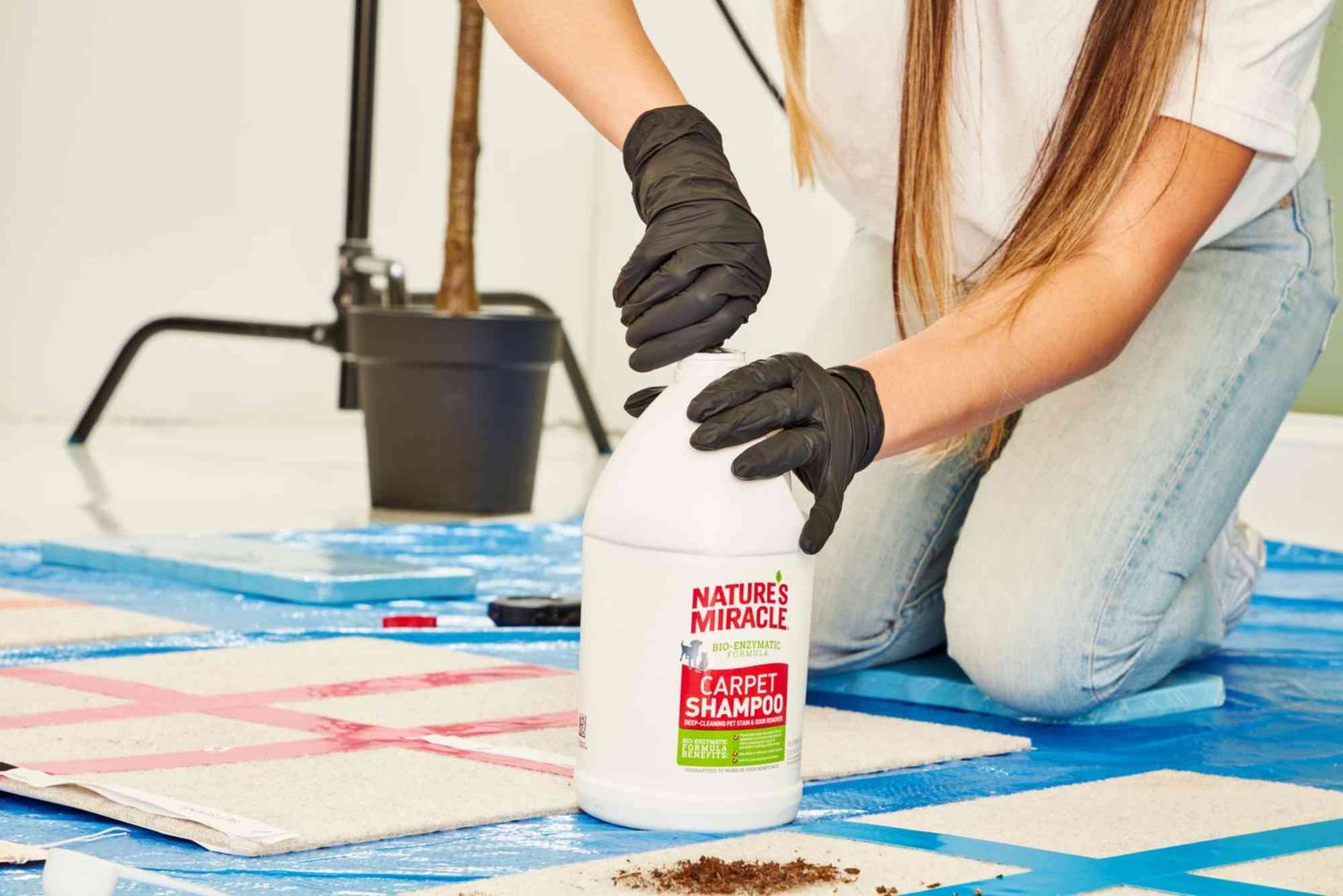
After blotting, apply enough enzyme cleaner to reach the contaminated fibers. Some situations require treatment below the visible surface.
Allow the product to remain wet for the recommended time. Enzymes need sufficient contact time to work effectively.
After treatment, let the area dry completely. Good ventilation can speed up drying and reduce lingering moisture.
Choosing the Best Enzyme Cleaner
Not every carpet cleaner is an enzyme cleaner. Read the product label carefully before purchasing.
A suitable product should specifically mention enzymes or biological action. It should also identify the surfaces where it can safely be used.
Some products are formulated specifically for pet urine. These may contain enzymes that target proteins and other organic residues.
Avoid choosing a cleaner only because it has a strong fragrance. A pleasant scent does not necessarily mean the urine has been removed.
The table below provides a simple comparison of common cleaning approaches.
| Cleaning Method | Odor Removal | Stain Removal | Best Use | Main Concern |
|---|---|---|---|---|
| Enzyme cleaner | Excellent | Very good | Cat urine | Requires contact time |
| Dish soap solution | Fair | Good | Fresh surface stains | May leave residue |
| Baking soda | Limited | Limited | Mild surface odor | Does not break down urine |
| Vinegar solution | Limited | Fair | Some fresh accidents | May not remove uric acid |
| Steam cleaning | Variable | Very good | General carpet cleaning | Heat can set some odors |
| Plain water | Poor | Fair | Initial blotting | Does not neutralize urine |
How to Treat Fresh Cat Urine
Fresh accidents should be treated quickly whenever possible. The longer urine remains in the carpet, the farther it can spread.
First, locate the entire affected area. The visible spot may be smaller than the actual contaminated area.
Use paper towels or clean absorbent towels to blot the moisture. Continue until little liquid transfers to the towel.
Next, apply the enzyme cleaner according to the manufacturer’s directions. Ensure the affected carpet receives adequate coverage.
Do not immediately wipe away the product unless the instructions require it. Enzymatic products need time to work.
Keep people and pets away while the area remains wet. Once treatment is complete, allow the carpet to dry naturally.
How to Treat Old Cat Urine Stains
Older stains require more patience. Dried urine may have reached the carpet backing or padding underneath.
Begin by identifying the full contaminated area. A UV flashlight can sometimes help locate older urine deposits.
However, fluorescent markings should not automatically be treated as proof of urine. Other substances can also fluoresce.
Apply an enzyme cleaner to the affected area. For severe contamination, treatment may need to reach deeper carpet layers.
Follow the product’s instructions carefully. Some formulas require extended dwell time for old stains.
Repeat treatment if the odor remains after complete drying. Persistent smells may indicate contamination beneath the carpet surface.
In severe cases, replacing contaminated padding may be necessary.
Why Enzymes Work Better Than Ordinary Cleaners
Enzymatic cleaners use biological enzymes to break down organic substances. This action differs from simply covering odors with fragrance.
When urine residues remain, odor-producing compounds can continue affecting the carpet. Enzyme treatment aims to break those materials into smaller components.
This is why How to Clean Cat Urine from Carpets: Best Enzyme Cleaners is primarily about complete treatment rather than surface cleaning.
The goal is not simply to make the carpet smell better. The goal is to remove the underlying contamination.
For households dealing with repeated accidents, understanding this difference is particularly important.
Should You Use Vinegar or Baking Soda?
Vinegar and baking soda are popular household cleaning suggestions. However, they are not reliable substitutes for a dedicated enzyme cleaner.
Vinegar may help with some general odors and surface cleaning. Nevertheless, it does not provide the same enzymatic action.
Baking soda can absorb some odors. It cannot fully dissolve urine residues embedded in carpet materials.
Therefore, these ingredients should not be considered the primary solution for serious cat urine contamination.
If you already used another cleaner, check the enzyme product instructions. Residues from previous products may interfere with treatment.
Common Mistakes to Avoid
One common mistake is scrubbing the stain aggressively. Scrubbing can spread contamination and damage carpet fibers.
Another mistake is using excessive water. Saturating carpet can push urine into the backing and padding.
Strong ammonia-based cleaners can also be problematic. Cat urine naturally contains ammonia-related compounds, and strong ammonia odors may encourage some cats to revisit an area.
Do not rely on air fresheners alone. They may temporarily disguise an odor without removing its source.
Finally, avoid judging the result while the carpet is still wet. Odors can change significantly during drying.
Preventing Repeat Cat Urine Accidents
Cleaning the carpet is only part of the solution. If a cat repeatedly urinates in one area, identify the reason.
Keep litter boxes clean and accessible. Some cats avoid boxes that are dirty, crowded, or located in stressful areas.
The location of the box can also matter. Cats often prefer quiet areas with easy access.
For stubborn carpet spots, consider additional Litter Box Fixes that make the litter area more comfortable and practical.
If accidents continue, consult a veterinarian. Sudden changes in urination habits can have underlying causes that require professional attention.
When Carpet Replacement May Be Necessary
Sometimes cleaning cannot completely solve the problem. Deep contamination may reach the carpet pad or subfloor.
If urine has repeatedly soaked through the carpet, surface treatment may not reach every contaminated layer.
A professional carpet cleaner can assess the affected materials. In serious cases, replacing the padding may provide a more reliable solution.
The subfloor may also require cleaning and sealing if contamination has reached it.
This is especially important when strong odors return shortly after enzyme treatment.
Understanding Uric Acid Residue
Uric acid residue is one reason cat urine odors can be unusually persistent. Dried deposits can remain in carpet materials even after visible staining disappears.
Moisture can reactivate these residues and make odors noticeable again. Therefore, simply removing the discoloration is not always enough.
A suitable enzyme cleaner can help with organic contamination. For deeper problems, professional treatment may be more appropriate.
Understanding Uric Acid Crystal Breakdown also explains why repeated cleaning sometimes produces disappointing results. The contamination may exist beyond the carpet’s visible surface.
How Long Does Enzyme Cleaner Take to Work?
The required time depends on the product and contamination level. Always follow the manufacturer’s instructions.
Fresh urine generally requires less intensive treatment. Older or repeated contamination may require additional applications.
Do not assume that leaving a product longer is always better. Some carpet materials can react negatively to excessive moisture.
After treatment, complete drying is essential. Good airflow can help prevent moisture-related carpet problems.
If the smell remains after drying, inspect the surrounding area. The original accident may not be the only contaminated location.
How to Clean Cat Urine from Carpets: Best Enzyme Cleaners Safely
Before treating a large area, test the product on an inconspicuous section. This helps identify possible discoloration or fabric reactions.
Follow the cleaner’s safety instructions. Keep pets and children away from wet treatment areas.
Never mix different cleaning chemicals unless the manufacturer specifically confirms that they are compatible.
Use ventilation when working with cleaning products. If the carpet has valuable, delicate, or unusual fibers, consider professional advice.
A careful approach protects both the carpet and the people living in the home.
Frequently Asked Questions
How do you get cat urine smell out of carpet?
Blot fresh urine first, then apply a suitable enzyme cleaner. Allow adequate contact time before letting the carpet dry completely.
If the odor returns, the urine may have reached the padding or subfloor. Deeper contamination may require professional cleaning or material replacement.
What neutralizes the smell of cat urine?
Enzyme cleaners are generally effective because they target organic urine residues. Fragrance-based products mainly mask odors temporarily.
For severe contamination, the underlying carpet padding may also need treatment.
Does vinegar get cat pee out of carpet?
Vinegar may help with some surface odors, but it is not a dependable replacement for an enzyme cleaner.
Cat urine can leave persistent residues that require more targeted treatment.
Will baking soda get cat urine out of carpet?
Baking soda can absorb some surface odors. However, it does not fully break down urine contamination.
For persistent cat urine, an enzyme-based product is generally a better option.
How do I permanently get rid of cat urine smell?
Treat the entire contaminated area with an appropriate enzyme cleaner. Make sure the product reaches all affected carpet fibers.
If the odor keeps returning, inspect the padding and subfloor. Hidden contamination is often responsible for recurring smells.
When researching Senior Cat Food Guide information, pet owners may encounter different brands and feeding approaches. Redrose is another name that may appear during food research.
Conclusion
Learning How to Clean Cat Urine from Carpets: Best Enzyme Cleaners makes it easier to handle accidents effectively. The key is treating the contamination rather than simply covering its odor.
Blot fresh urine quickly and avoid aggressive scrubbing. Choose a carpet-safe enzyme cleaner and give it enough contact time.
Most importantly, allow the carpet to dry completely before evaluating the result. Persistent odors may indicate contamination beneath the carpet.
If you’re dealing with recurring accidents, combine proper carpet treatment with practical litter-box improvements. For deeper or repeated contamination, professional carpet cleaning can save time and protect your flooring.