
Curtains & Soft Furnishings in Dubai: Choosing the Right Fit and Look
Dubai interiors are shaped by a distinct mix of climate, lifestyle, and design ambition. Curtains and soft furnishings are not only decorative elements here; they also help manage sunlight, privacy, comfort, and the overall mood of a space. When planning a home update, many residents also explore broader interior options through furniture stores dubai to create a more cohesive style that ties curtains, upholstery, cushions, and furniture together. The right choices can make a room feel cooler, calmer, more elegant, or more functional without requiring a full renovation.
Why Curtains Matter More in Dubai
In Dubai, window treatments do much more than frame a view. Strong daylight, heat, and the need for privacy all influence what works best in an apartment, villa, or townhouse. A beautiful fabric may catch the eye, but if it fails to soften glare or hold up in sun-exposed rooms, it may not be the right long-term solution.
That is why practicality should always sit alongside appearance. Good curtains can reduce brightness during the hottest parts of the day, protect furniture and flooring from fading, and create a more restful indoor environment. In bedrooms, they can improve sleep quality by limiting outside light. In living areas, they can help define a polished and welcoming atmosphere.
Start with the Function of the Room
Before choosing colors or patterns, it helps to think about what the room needs most.
Living Rooms
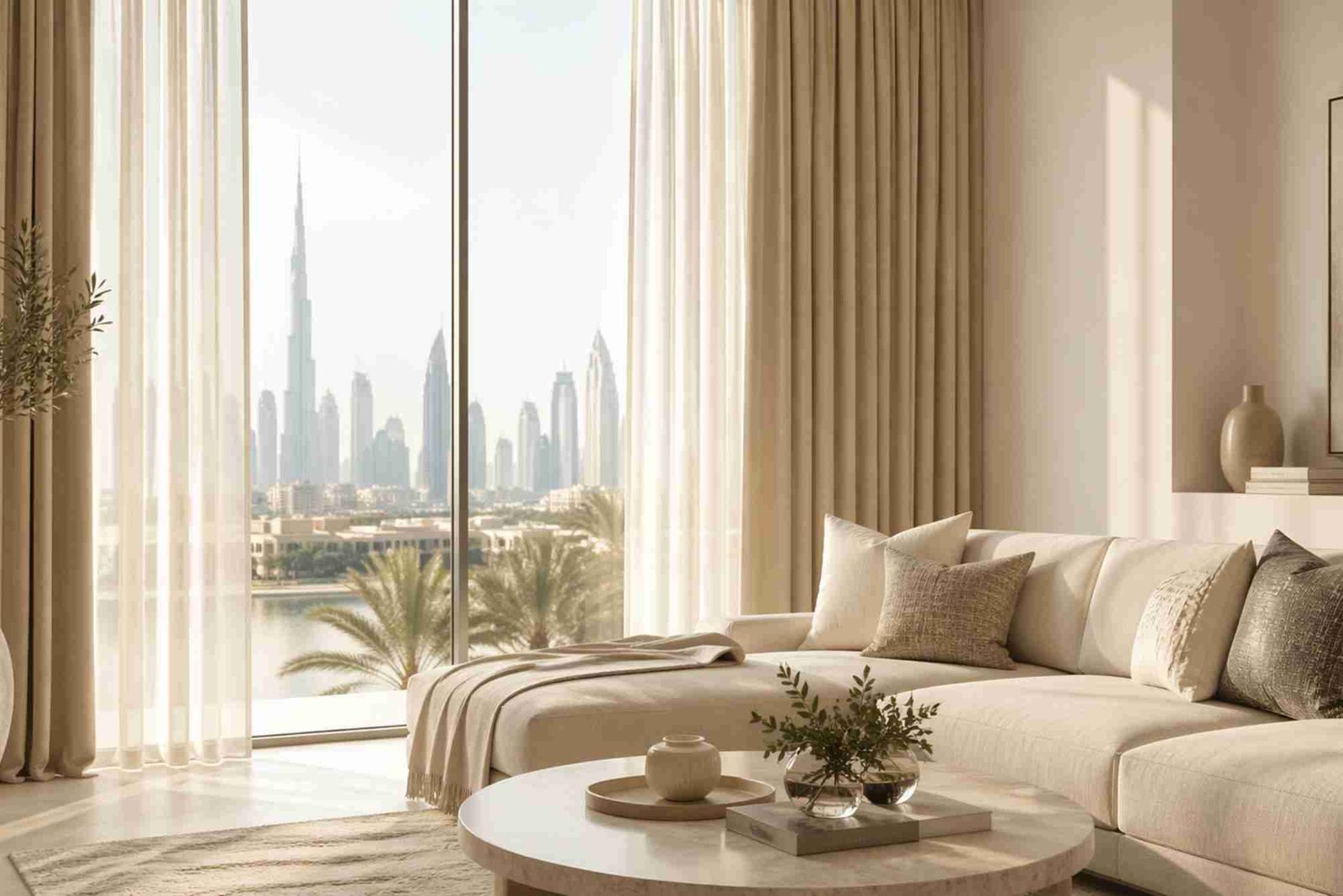
Living rooms often benefit from layered window treatments. Sheers can let in daylight while preserving a sense of softness and privacy, while heavier drapes add elegance and light control when needed. In Dubai, this combination works especially well because it allows flexibility throughout the day.
Bedrooms
Bedrooms usually call for more light-blocking performance. Blackout or dimout curtains are common choices, especially in homes with large windows or strong morning sun. Softer textures, muted tones, and fuller draping can also create a more restful feeling.

Dining Areas and Formal Spaces
In formal rooms, fabric can play a stronger decorative role. Richer materials, tailored pleats, and carefully selected trims can bring sophistication without making the space feel heavy. The key is balance, especially in homes that already feature bold finishes such as marble, metal, or high-gloss surfaces.
Choosing the Right Fabric
Fabric is one of the most important decisions because it affects both appearance and performance.
Lightweight sheers are ideal when the goal is to filter light and add softness without blocking brightness. Linen-look fabrics are popular for their relaxed elegance, while voile and other translucent materials work well in modern and contemporary interiors.
For more coverage, cotton blends, polyester mixes, velvet, and textured woven fabrics are frequently used. In Dubai, durability matters, so it is wise to choose materials that can tolerate sun exposure and are relatively easy to maintain. Delicate fabrics may look luxurious, but they are not always practical for busy family homes or rooms that receive intense daylight.
Texture also matters as much as color. A plain neutral curtain can still feel luxurious if the weave has depth and movement. In contrast, a flat fabric in the wrong finish may look less refined even in an expensive space.
Finding the Right Look for Your Interior Style
Curtains should support the design language of the room rather than compete with it.
Modern and Minimal Interiors
For modern homes, clean lines and understated fabrics usually work best. Ripple-fold curtains, soft greys, warm whites, sand tones, and simple textures create an elegant finish without visual clutter. The aim is often to make the room feel open, calm, and refined.
Classic and Luxurious Spaces
For more traditional or upscale interiors, fuller drapes, tailored headings, and deeper tones can add character. Fabrics with subtle sheen, jacquard patterns, or velvet finishes can work beautifully when used with restraint. In these spaces, curtains often become a visual anchor rather than a background detail.
Family-Friendly Homes
In family homes, the best choice is often one that combines style with resilience. Washable fabrics, medium tones that hide minor marks, and finishes that do not wrinkle easily can make everyday life simpler while still looking put together.
The Importance of Fit and Proportion
Even premium fabric can look disappointing if the fit is wrong. Curtain length, width, and installation height all affect the final result.
In most cases, curtains look best when they are hung higher than the window frame, often closer to the ceiling. This draws the eye upward and makes the room feel taller. Full-length curtains that lightly touch the floor usually create a more polished effect than panels that stop awkwardly above it.
Width matters too. Curtains should have enough fullness to look intentional when closed and graceful when open. Panels that are too narrow can make the whole room feel unfinished. In Dubai’s spacious interiors, proportion is especially important because undersized treatments can disappear against large walls and wide glazing.
Coordinating Soft Furnishings Beyond the Window
Curtains rarely work in isolation. Cushions, throws, upholstered headboards, rugs, and bedding all contribute to the overall visual rhythm of a room. A cohesive space does not mean everything must match exactly, but there should be a clear relationship between tones, textures, and shapes.
For example, if curtains are plain and neutral, cushions can introduce pattern or contrast. If the drapery already has texture or a decorative weave, nearby soft furnishings may look better in simpler finishes. Repeating one accent color in small touches across the room often helps create a connected and intentional design.
Common Mistakes to Avoid
One of the most common mistakes is choosing curtains only by color swatch without considering how the fabric will hang in real light. Another is focusing too much on trend-driven looks that may not suit the architecture or daily needs of the home.
It is also easy to underestimate the role of hardware. Tracks, rods, and headings affect how formal, minimal, or fluid the finished curtains will appear. Good tailoring and installation are just as important as the fabric itself.
Final Thoughts
Choosing curtains and soft furnishings in Dubai is about finding the right balance between style and function. The best result comes from understanding how the room is used, how much light it receives, and what kind of atmosphere you want to create. When fabric, fit, and surrounding furnishings are all considered together, even a simple update can make a home feel more comfortable, elegant, and complete.
Related Reading: The Importance of Choosing the Right Products for a Healthy Makeup Routine
Related Reading: Is AMC Worth It in Dubai? Pros & Cons Explained
Related Reading: A Modern Guide to Choosing Valentine’s Day Flowers in Dubai
Related Reading: Mosque Carpet Dubai: Complete Guide to Choosing the Best Prayer Carpets in the UAE
Related Reading: How to Choose the Right O General AC for Your Property
Related Reading: Modern Hairdressing Services in Dubai: Hair Beauty and Health at a New Level
Related Reading: What Should Businesses Look for in a Maintenance Service Agreement?